
If you're running underground shows
Control the space. Know what matters.
Booking details, audience management, legal requirements—everything that weighs on you when you're running a basement, warehouse, or unmarked spot.
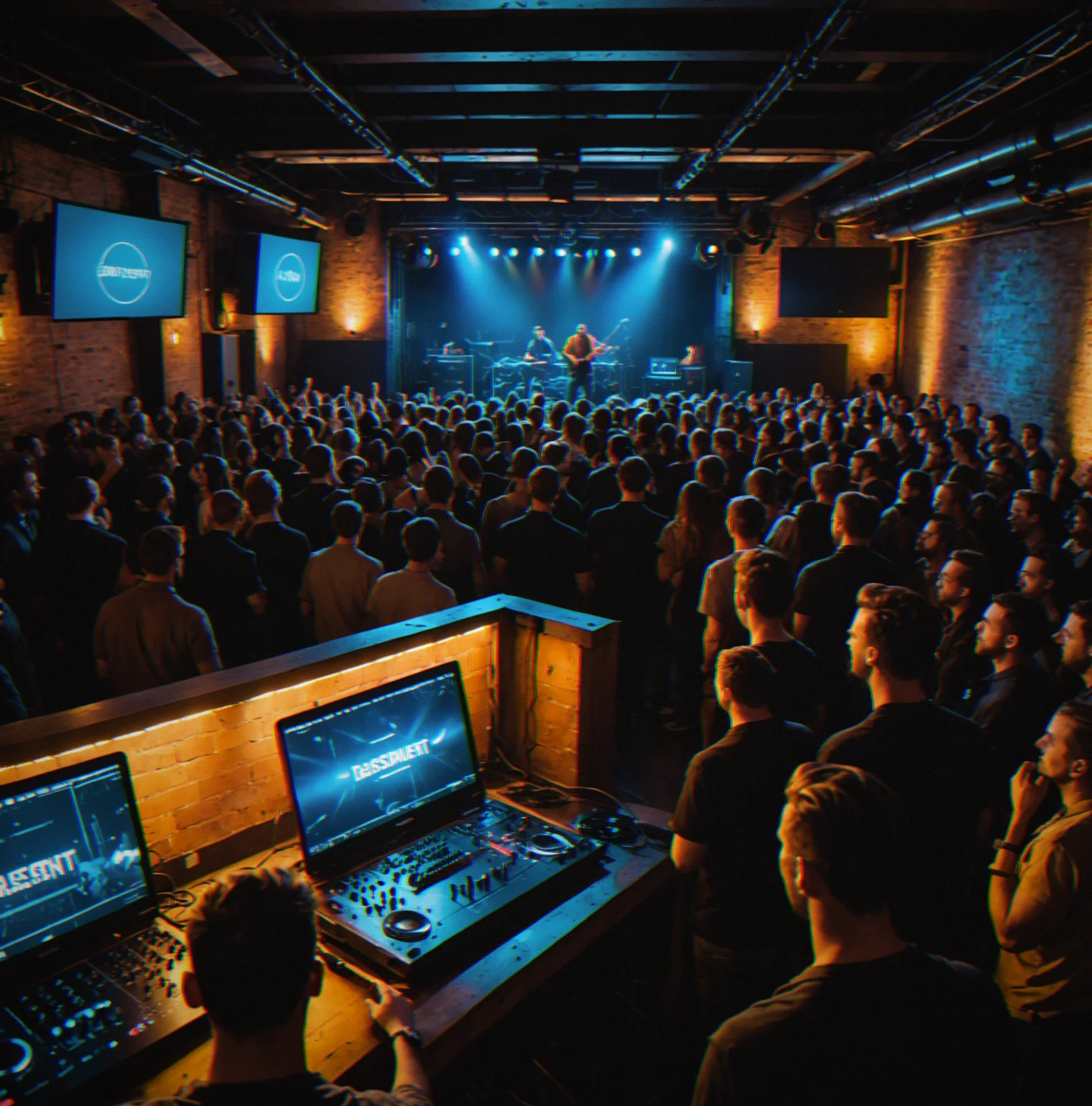
You deal with fire marshal limits, sound permits that change city to city, and bands showing up with gear that doesn't fit. You're watching the room at midnight to catch problems before they happen, paying out artists, and figuring out liquor laws that make no sense between one place and the next.
Velvetspark strips away the noise. Hard numbers—speaker output, monitor wiring, fire code thresholds. The actual operational stuff. [The things you learn the hard way at two in the morning.] No fluff. Just what you need to know.
Built for operators
What you're actually managing
The operational breakdown of running an underground venue
Capacity and fire code limits
What's the real number? Not what you think fits—what the fire marshal says fits. A basement room maxes out around 75 to 150 people. A converted warehouse can hold 200 to 400. The math is straightforward: square footage divided by occupant load factor (usually 7 sq ft per person for standing room), then subtract 15% because humans cluster. Get the permit before you sell tickets.
Sound system specs and setup
For a hundred-person basement you need roughly a pair of 400W powered mains, a 500W subwoofer, and a separate 200W monitor wedge. You're hitting 85 to 92dB at mix position. Bass travels through foundation—put that subwoofer on isolation pads (under fifty dollars) or it resonates directly into your neighbor's apartment. Soundcheck at 2pm, not 11pm. Learn your room volumes before doors open.
Regional licensing friction
NYC requires community board approval and costs several thousand. LA runs under two grand through the Department of Alcoholic Beverage Control. Chicago takes months and depends on your aldermanic district—somewhere between five hundred and two thousand. What's your actual process? Read the lease first because some landlords ban alcohol outright. All three states need a quarter million in liability insurance minimum. Know the rules for your city before you assume you can operate.
Crowd dynamics and risk management
Violence peaks around 11:30pm to midnight—band changeover, deep drinks, bathroom lines. Station someone moving the floor. Watch for stares that last too long. Mix crowds carefully because a 40-year-old jazz fan and a 22-year-old punk fan have different energy expectations. Start early sets for older crowds, run later sets for younger ones. One person counting headcount in real time with a tally counter. When you hit fire capacity, you stop entry. No math, no debate.
Artist payment and load-in logistics
Pay a local band $150, a band drawing 40+ people $300, touring acts $500 or more. Guarantee plus door split above take, or straight cash before midnight. Two bands? Don't split equally if one pulled the crowd. Load-in starts an hour and a half before doors—clear stairwell pathways, prebuilt drum riser under thirty dollars, velcro tape instead of duct for cable runs. Count cash with a band rep present. Five minutes prevents future arguments.
Operations, not theory
What you actually need to run the space
Fire code capacity math
Take your square footage, divide by the occupant load factor. Done. A 1,500 sq ft basement gets you around 200 people. A 1,000 sq ft room maxes out at 140. The fire marshal has the final say, not you.
PA wattage and monitor setup
Two 400W mains, a 500W subwoofer, and a 200W monitor wedge handles a 100-person room. You'll land somewhere between 85 and 92dB. Throw isolation pads under the sub—they run about 40 bucks and actually stop neighbors from calling in noise complaints.
City-specific licensing breakdown
New York wants 2,500 to 10,000 dollars plus community board approval. LA's cheaper but the paperwork moves slower. Chicago depends on which alderman you're dealing with—could be smooth or a nightmare. Figure out your city's rules before you commit to a lease.
Noise ordinance enforcement
New York keeps it at 80dB between 10pm and 7am in residential areas. Los Angeles drops to 55dB at the property line once 10pm hits. Get three violations within a year and they revoke your entertainment license. Schedule soundcheck for early afternoon, not late at night.
Crowd reading and de-escalation
Things get tense between 11:30pm and 12:30am. Watch for people staring too long at each other, groups clustered away from the music, hands staying in jacket pockets. Walk over calmly and tell them to break it up. Most will back off right away. The rest, you call the police.
Artist payment and door splits
Local bands get 150 dollars. A band pulling 40 or more people gets 300. Touring acts start at 500 and up. Either guarantee them a base plus a cut of the door, or straight cash before midnight. Count it in front of a witness. Takes five minutes and kills every payment argument that could happen later. Never pay someone while they're drunk.
Load-in logistics and timing
Clear the pathways ninety minutes before you open the doors. Grab a prebuilt drum riser if you can find one cheap. Use Velcro for cables instead of duct tape. Station one person at the entrance to manage the flow. Warn the band if your basement has tight hallways or stairs. This part runs smoothly when you actually plan it out.
The math behind running an underground venue
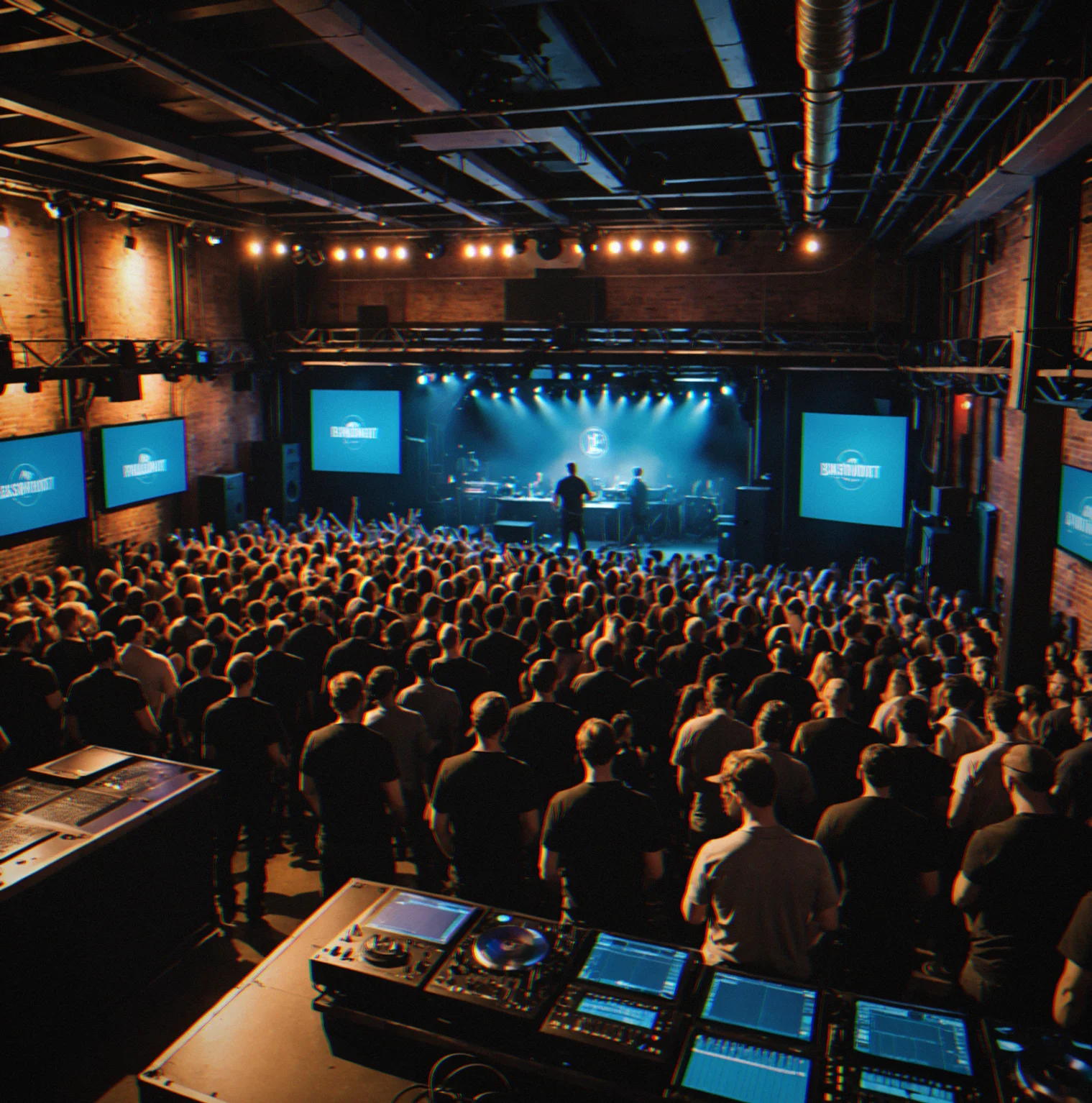
You're not running a business in ideal conditions. You're managing a basement or converted warehouse where the fire marshal sets your ceiling, the city sets your noise limits and the landlord's lease sets the rules you actually live by. The operational side isn't romantic—it's permits, headcount tallies, sound system wattage, and artist payment logistics. Every show is a puzzle with fixed constraints: capacity determined by square footage and egress routes, sound levels capped by ordinance, liquor service governed by state and local rules that differ wildly by region.
In New York you're looking at needing community board approval and spending somewhere between $2,500 and $10,000 for a liquor license. Los Angeles is cheaper—more like $500 to $1,200 through the Department of Alcoholic Beverage Control but the process crawls. Chicago depends on your aldermanic district, which means some operators breeze through approval while others get stuck waiting 3 or 4 months and still end up paying $500 to $2,000. Your sound system needs to sit in that 85 to 92dB range at mix position without setting off noise complaints or bringing the fire marshal by. Isolation pads under the subwoofer (not expensive—around $40) keep it from shaking through your neighbor's apartment walls. Load-in timing, door staffing and how you split payments with artists all matter in ways that ripple through your night—screw one up and you're dealing with delays, lost money or worse.
The venues that don't fold within two years tend to run three shows a month instead of pushing four, they pay their artists when they say they will and they show up about an hour and a half early to clear pathways and get the sound dialed in. You're reading the room at 11:45pm when the mood could shift on a dime, managing crowds with totally different expectations of what the night should be and keeping a straightforward ledger tracking dates, headcounts, what the bar made and anything that went wrong. None of this feels like running a music venue. It feels like logistics. But that's the actual game.
Fire code compliance
Take your square footage and divide by 7 (that's your occupant load). The number you get is your capacity. No math, no debate. That's it.
Regional licensing (so different)
New York, Los Angeles and Chicago each have their own process, their own timeline and their own price tag. Figure out what your specific city actually requires before you commit to a space.
Sound system and noise management
Concrete PA specs, isolation pads and soundcheck timing prevent your neighbors from complaining and keep the fire marshal away. Bass isolation costs next to nothing. Legal trouble costs everything.
Crew and logistics
You need to count heads at the door, coordinate load-in timing, make sure artists get paid on schedule and keep notes on what happened. Three shows a month and you survive. Push four and you burn out.
The actual venue
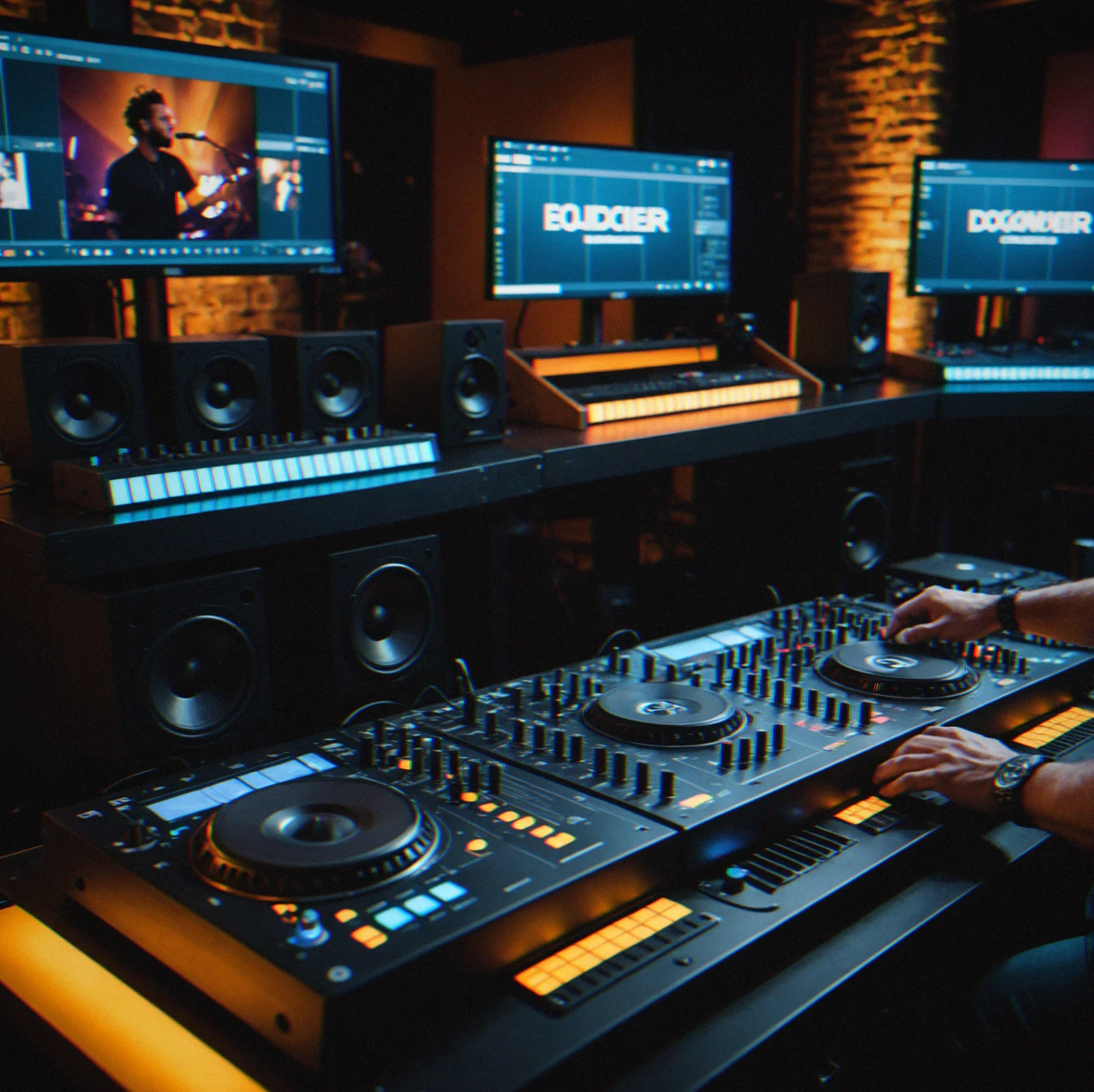
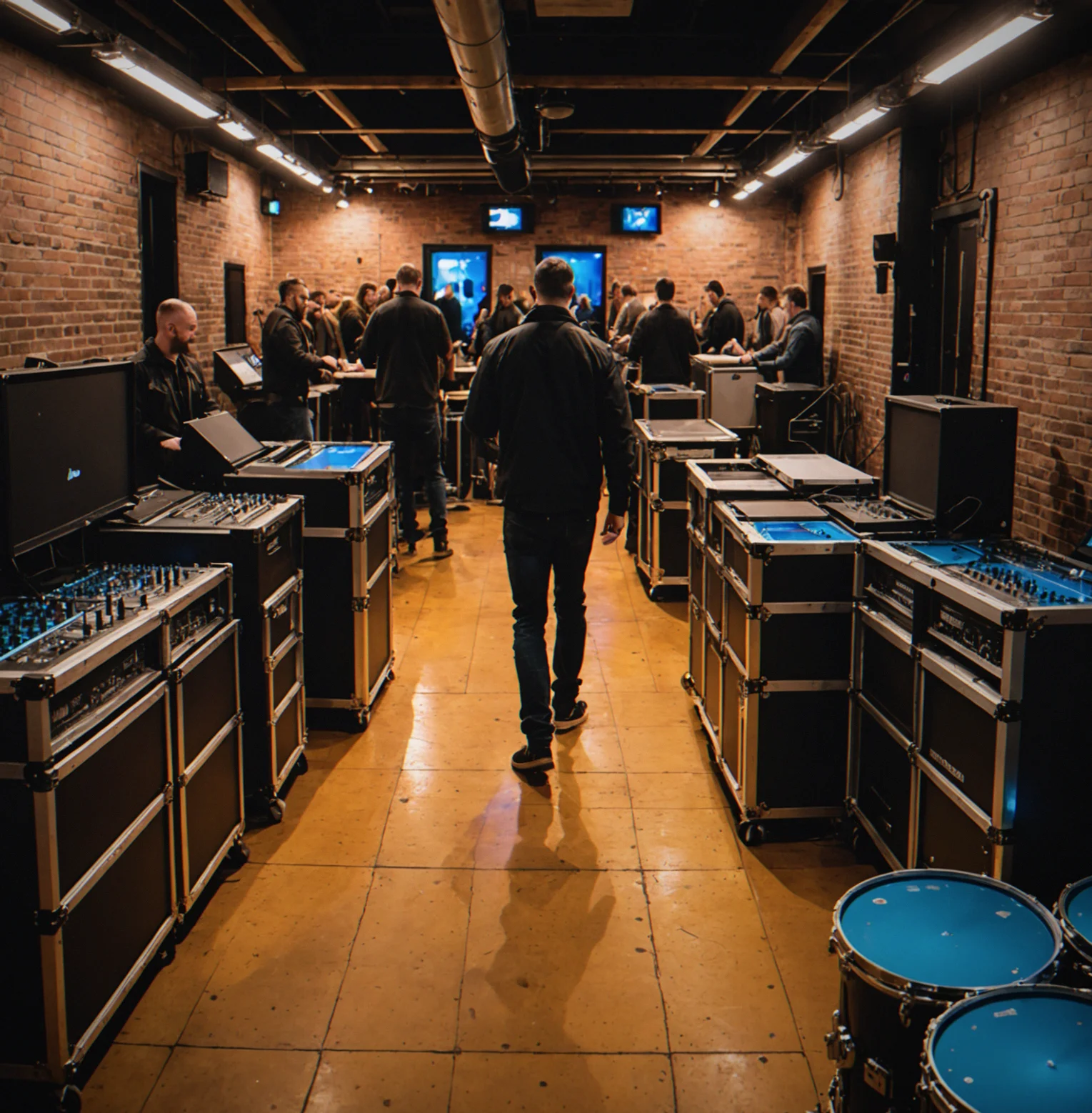
What underground spaces really look like once you get past the mystique. Concrete basement walls, fire exits, PA systems hanging off rafters, and all the behind-the-scenes stuff that keeps a show on track. This is what the work actually is.
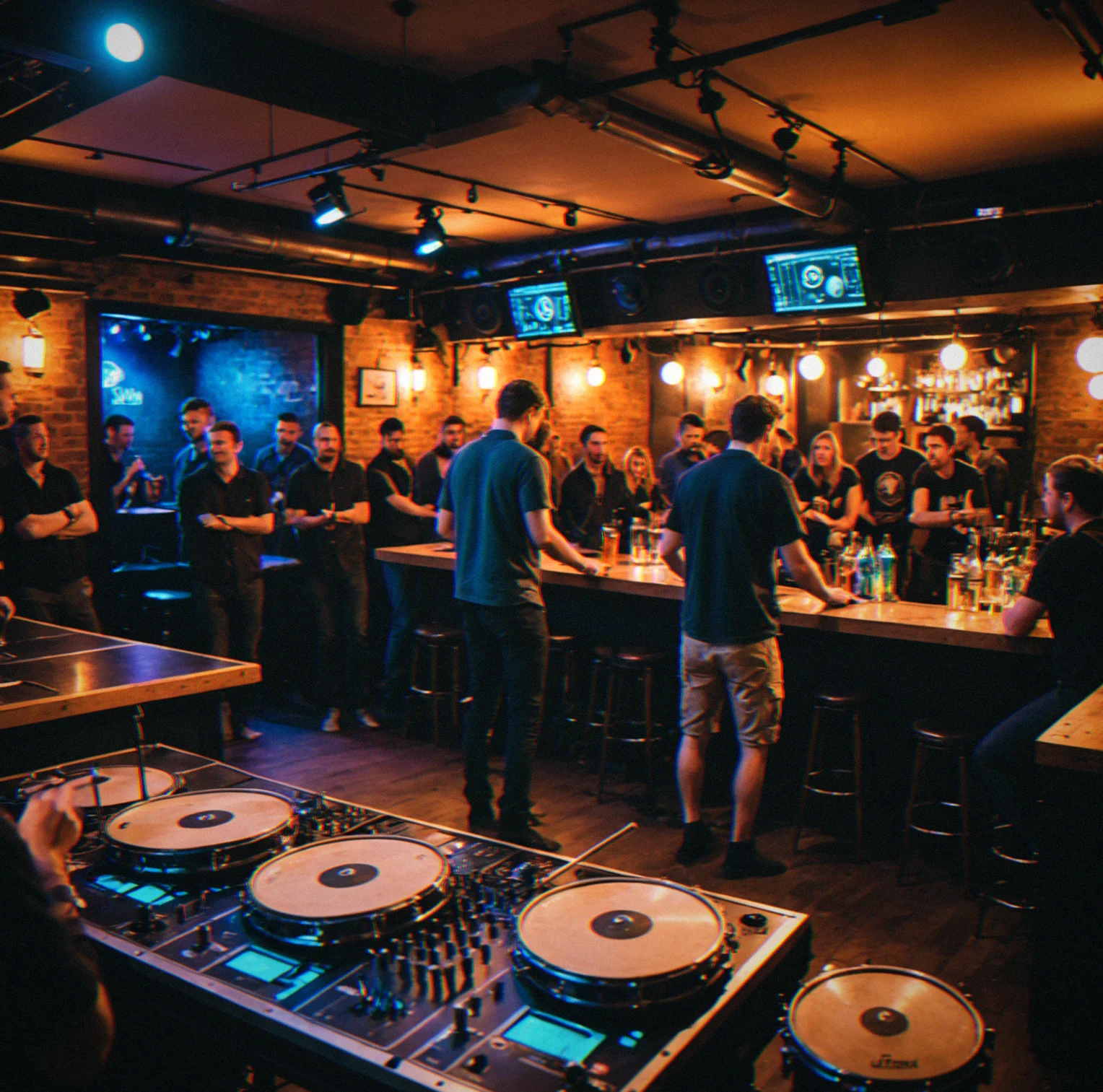
Basement venue with low ceilings and exposed pipes, drum kit on stage, people clustered around the bar
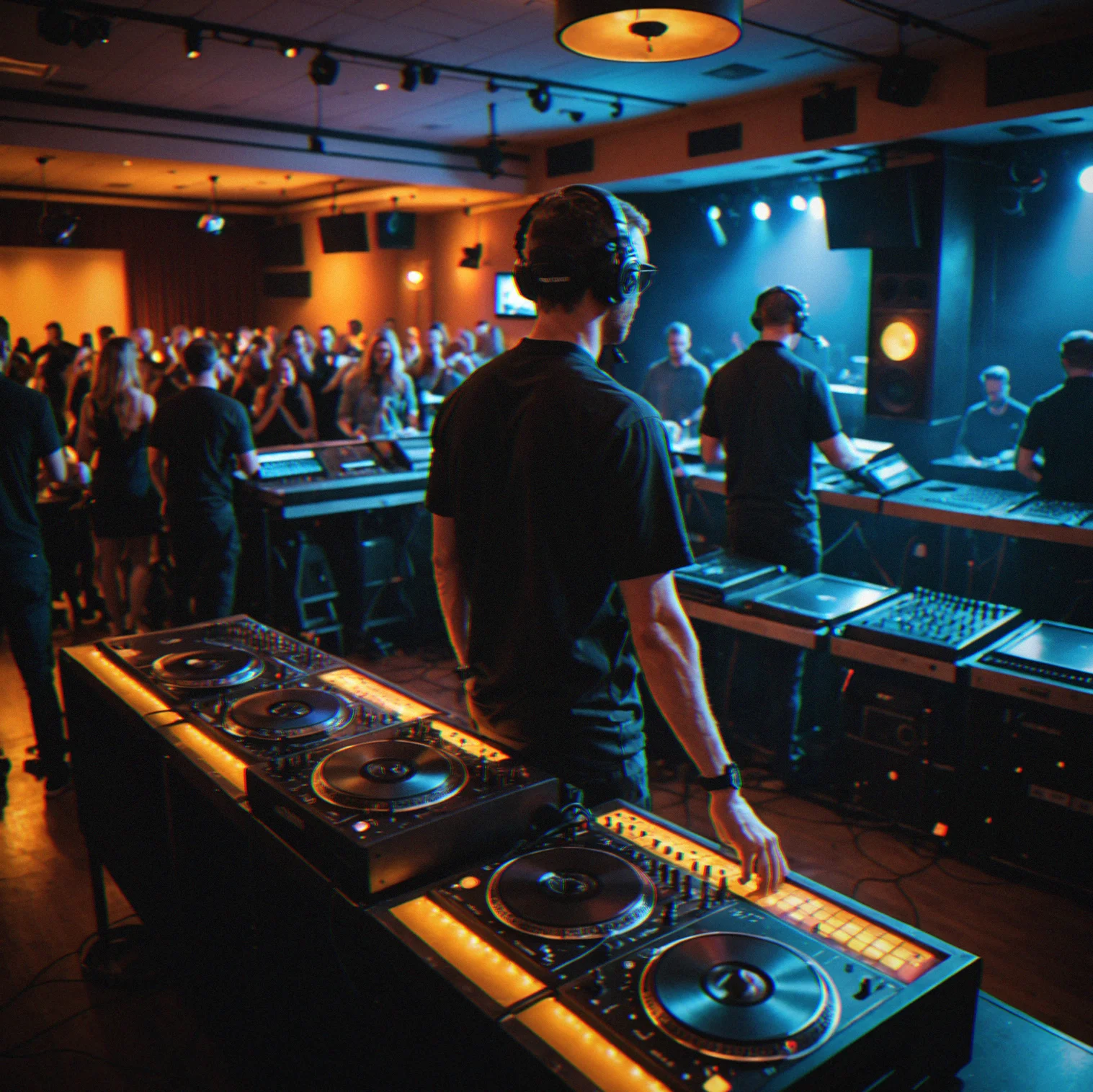
Two powered speakers on stands, subwoofer sitting on isolation pads, mixing board positioned where you can watch the room
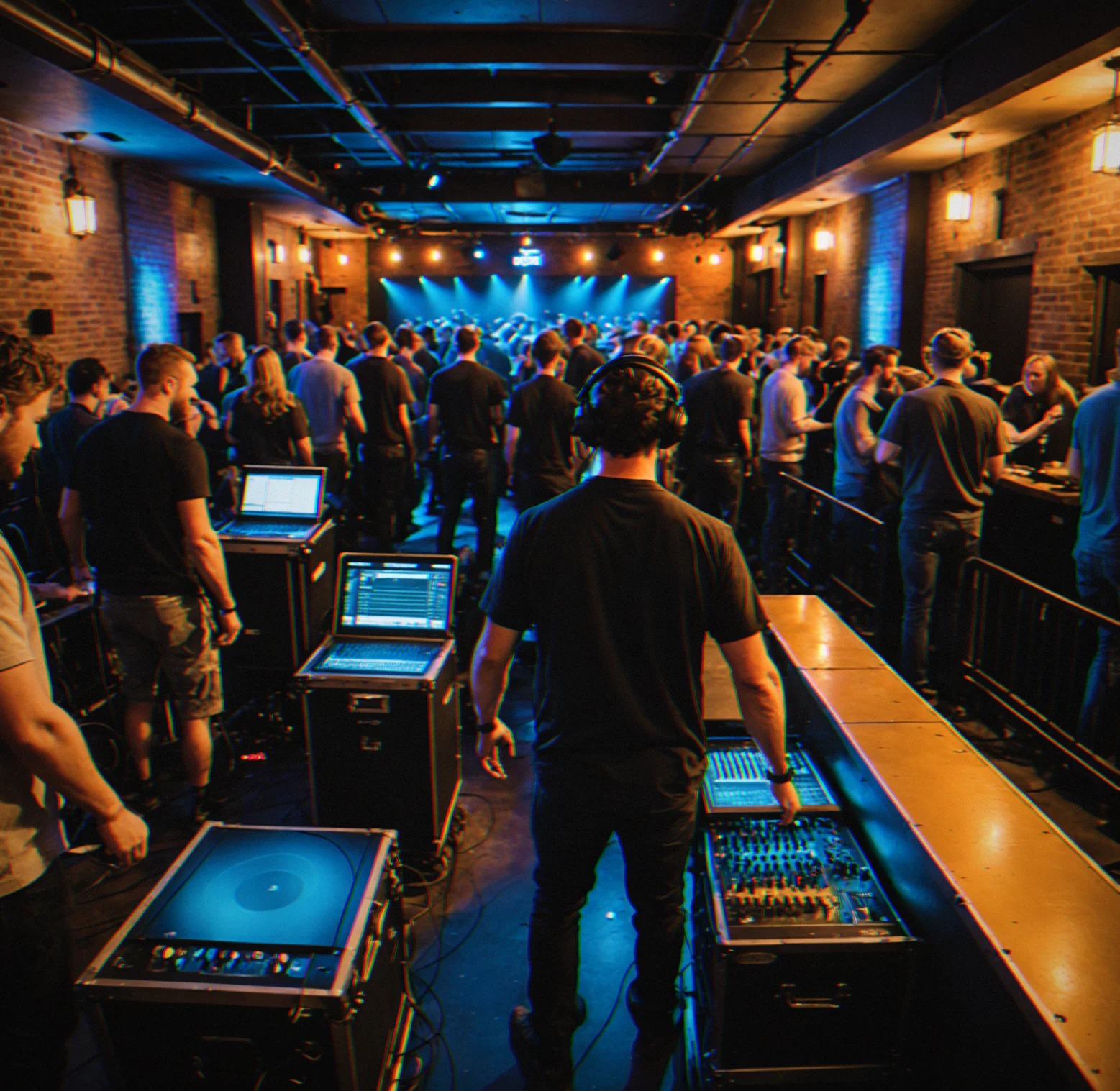
Band hauling amps down narrow basement stairs during load-in, door person managing the flow at the entrance
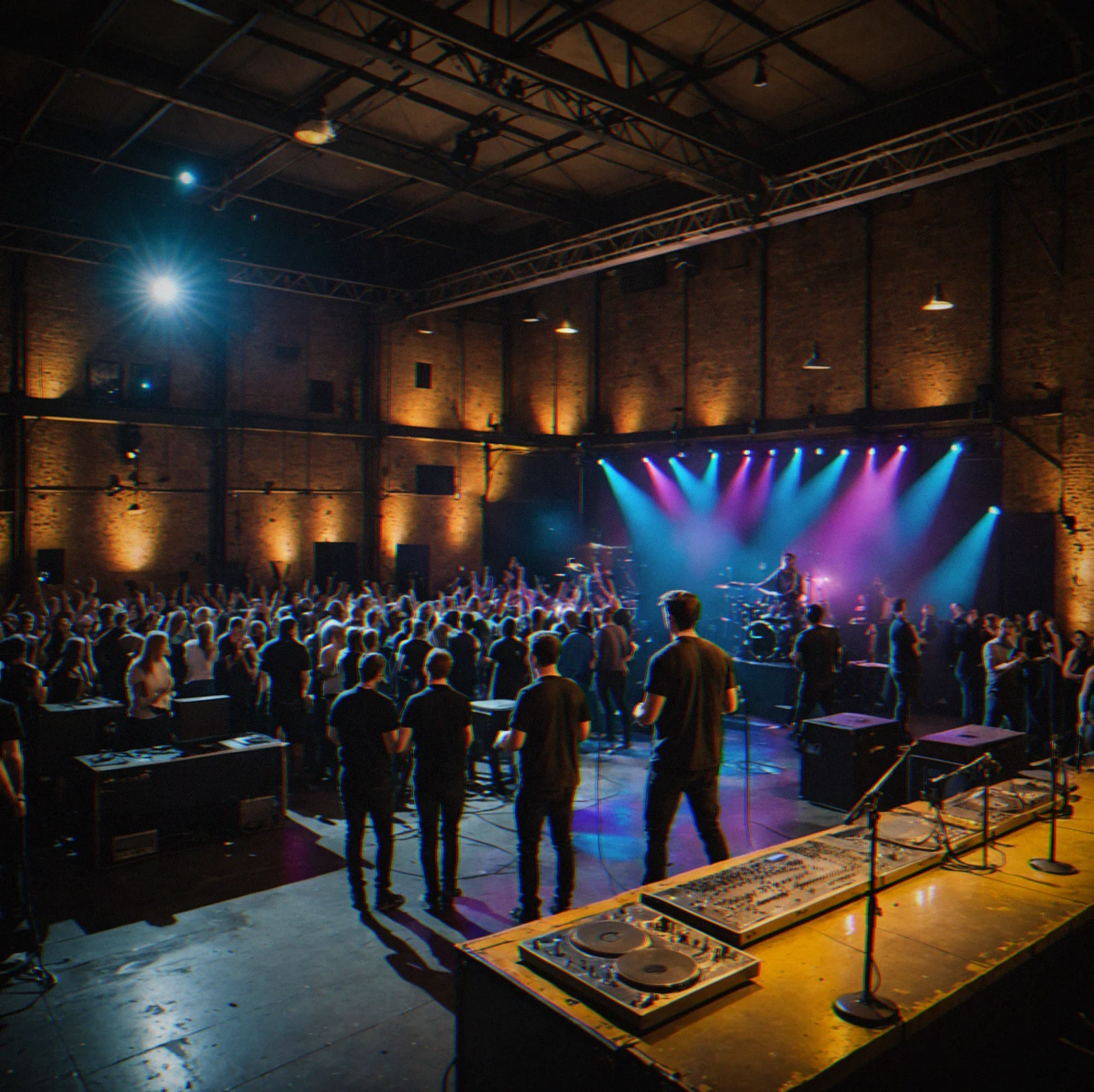
Old warehouse space with concrete, high ceilings, industrial light rig rigged overhead, stage reayd for a decent-sized band
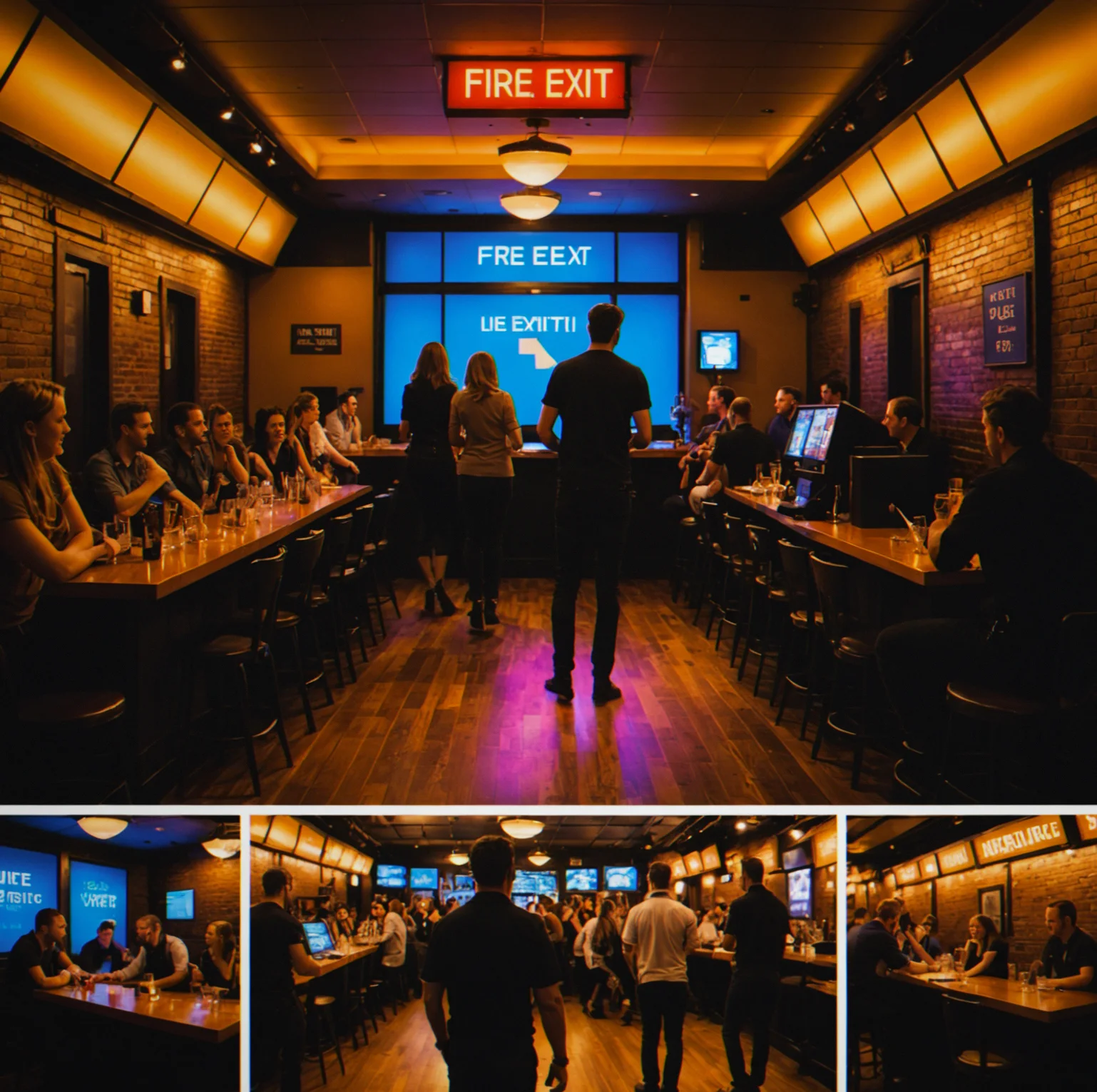
Fire exit sign, capacity limit posted, numbered seating marked on the floor—the regulatory stuff vneues have to deal with
5 images
What actually matters
The operational checklist for underground venue survival
Capacity calculation by code
Take your square footage, dviide by 7 for the occupant load factor in standing room. Then subtract 15% because people bunch up. That's your actual limit. Fire marshals won't let you argue with it.
Sound system right-sizing
A basement holding a hundred people needs two 400W main speakers, a 500W subwoofer, and a 200W monitor wedge. You'll hit somewhere between 85 and 92 decibels. Keeps complaints down, keeps fire inspectors away, and keeps you from buying gear you don't need. Isolation pads run forty bucks. Regretting your choices costs way more.
Regional licensing navigation
New York has one approval process. Los Angeles has different timelines. Chicago's got aldermen you have to deal with. Every city makes its own rules, sets its own fees, has its own people to talk to. Learn them before you sign anything.
Noise ordinance compliance
In New York residential zones you're limited to 80 decibels after 10pm until 7am. Los Angeles caps you at 55 decibels at the property line once 10pm hits. Three strikes and they revoke your entertainment license. When you soundcheck matters.
Crowd management protocols
Violence usually happens between 11:30pm and 12:30am. Have someone on the floor watching. Look for groups that aren't there for the music. Walk over and calm things down before they get worse. Most people will back off.
Artist payment logistics
Local bands get around 150. If they draw 40 people or more, that's 300. Touring acts start at 500. You can do a guarantee plus door split or just pay them straight cash. Count the money with another person in the room before midnight. Math done drunk is always wrong.
Load-in timing and pathways
You've got 90 minutes. Stairs need to be clear. Build your drum riser ahead of time. Bring reusable velcro tape. One person coordinates it all. Takes longer than that, you didn't plan right.
Operational durability
Run three shows a month for four months straight. Pay artists on time. Show up early yourself. Keep records of what happened and how many people came. Venyes that last two years do all this without thinking about it. Everything else is noise.
The baseline operations
What you need to know before you book the first show
Fire code capacity limits
Take your square footage and divide by 7. That's your capacity. Not aspirational, not negotiable. A 1,500 sq ft basement? You're looking at 200 people max. A 1,000 sq ft room gets you to around 140. The fire marshal isn't there to help you push it further.
Sound system specifications
You want a pair of 400W powered mains, a 500W subwoofer sitting on isolation pads, and a 200W monitor wedge. Running that setup gets you into the 85–92dB range at the mixing position. That's the sweet spot where people can actually hear the band without neighbors losing their minds. Turns out bass control matters way more than just throwing wattage at the problem. Screw it up and someone's calling about noise.
Regional licensing rules that actually vary
New York requires community board approval and you're dropping somewhere between $2,500 and $10,000 to make it official. LA moves faster but wants different paperwork through the state. Chicago? That depends entirely on your alderman. Every city has its own process. Don't find out after you've signed the lease.
Crowd dynamics and de-escalation
The danger window is 11:30pm to 12:30am. Band transitions, people getting deeper into drinks, bathroom bottlenecks — it all compounds. Station someone on the floor whose job is watching for clusters of tension, the stares that won't break, hands staying in jackets. Most situations defuse. The ones that don't, you call the cops.
Artist payment and load-in timing
Local bands usually want $150. A band that's pulling in 40 or more people might get $300. Touring acts are $500 and up. Count out the cash with someone else there before midnight hits. For load-in, plan on 90 minutes before you open the doors. Clear the pathways, have your drum riser built already, assign one person to direct traffic. If it's taking longer than that, you weren't prepared.
What you're actually dealing with
The real operational breakdown
Capacity math that the fire marshal enforces
Take your square footage and divide by 7. That's your occupant load for standing room. A 1,200 sq ft basement bottoms out around 170 people—not 200, not 180. The fire marshal shows up, counts heads, and locks the place down if you're over. There's no discussion about it.
Sound system specs that prevent noise complaints
You want a pair of 400W powered mains, a 500W sub sitting on isolation pads, and a 200W monitor wedge. Aim for somewhere between 85 and 92dB at your mix position. Bass travels through concrete foundations like it owns the place, so skip the isolation and your neighbors will own you instead. Forty bucks in pads or hundreds in cease-and-desist letters. Pick one.
City licensing that's completely dfiferent everywhere
New York wants community board sign-off and you're looking at $2,500 to $10,000. Los Anegles runs $500 to $1,200 but the approval timeline is weird. Chicago is wild—it depends on your alderman's actual mood and costs somewhere between $500 and $2,000. Some aldermen are chill about it. Others will make you sit for four months just because. Figure out what your city actually requires before you commit to anything.
Crowd reading and de-escalation that happens in real time
Between 11:30pm and 12:30am things get tense. Band changeover, people are deep in drinks, bathroom lines are long, and bored people get stupid. Put someone on the floor watching for clusters of tension, the stares that don't break, hands moving toward jackets. Walk over to them calm and steady. Say 'let's break this up.' Most people will scatter. The ones who don't, that's when you call the police.
Artist payment logistics that actually matter
A local band gets $150. A band that pulls 40 or more people gets $300. Touring acts start at $500 and go up. Decide ahead of time if you're doing a guarantee plus door split or just straight cash. Count everything with a band rep standing right there before midnight rolls around. If you've got two bands splitting the night, don't pay them equally unless they both pulled the same crowd. Headliner gets more. Takes five minutes and saves you from every argument that comes after.
What venue operators actually need to know
You're thinking about running a venue, or you're already doing it and the numbers aren't working. Here's the stuff that matters.